New vape kits: what is really out in 2026
Every week, British retailers announce arrivals. On paper everything is new: new pod, new generation, new cartridge. In practice a large share of these launches reuses an identical base under a redrawn shell. For a reader looking to replace hardware without wasting money, the useful question is not what has just landed but what has genuinely changed, and that is a much shorter list than the new vape kits pages suggest.
What new vape kits actually deliver in 2026
New vape kits are judged on three points only: the lasting availability of their consumables, battery capacity and the quality of the filling system. Everything else, colours, screens, coatings, belongs to the packaging rather than the product.
Read the new arrivals pages of the main British retailers and one observation imposes itself. Almost every launch is a small rechargeable pod. Powerful boxes now account for a fraction of the announcements, and they arrive on much longer cycles.
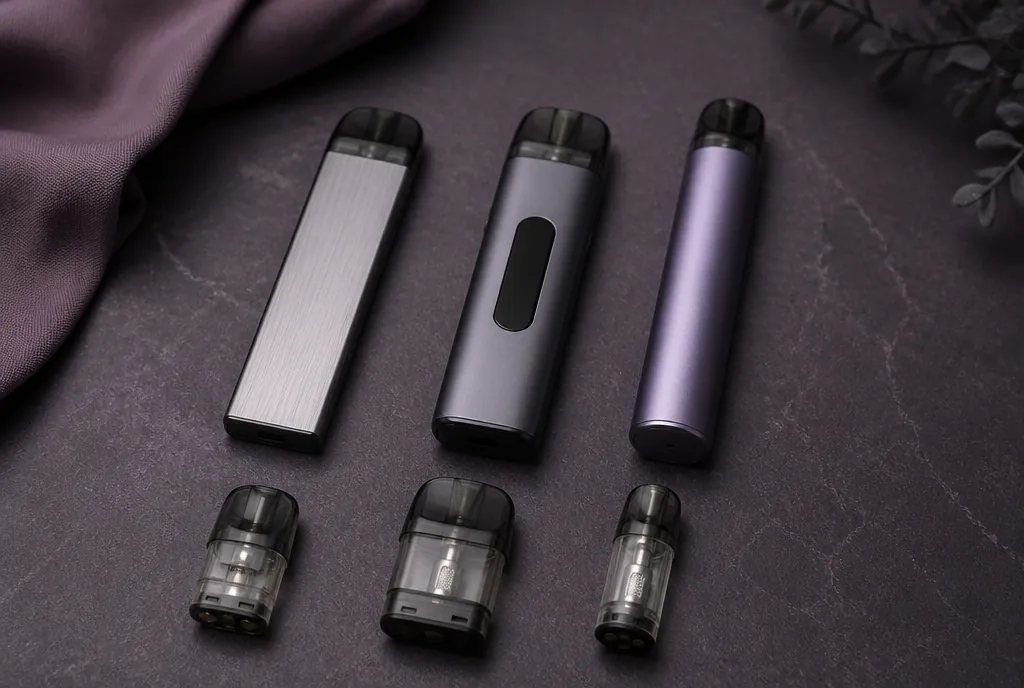
The names doing the rounds in 2026 make the point on their own: Vaporesso Xros 6, OXVA NeXlim 2, Smok Nord 6, Caliburn G5, Voopoo Argus G3. All are refillable pods with integrated batteries and interchangeable cartridges. The format has become the default.
What the shelves are really offering
Catalogues give an accurate photograph of the market, provided you read them by product family rather than model by model.
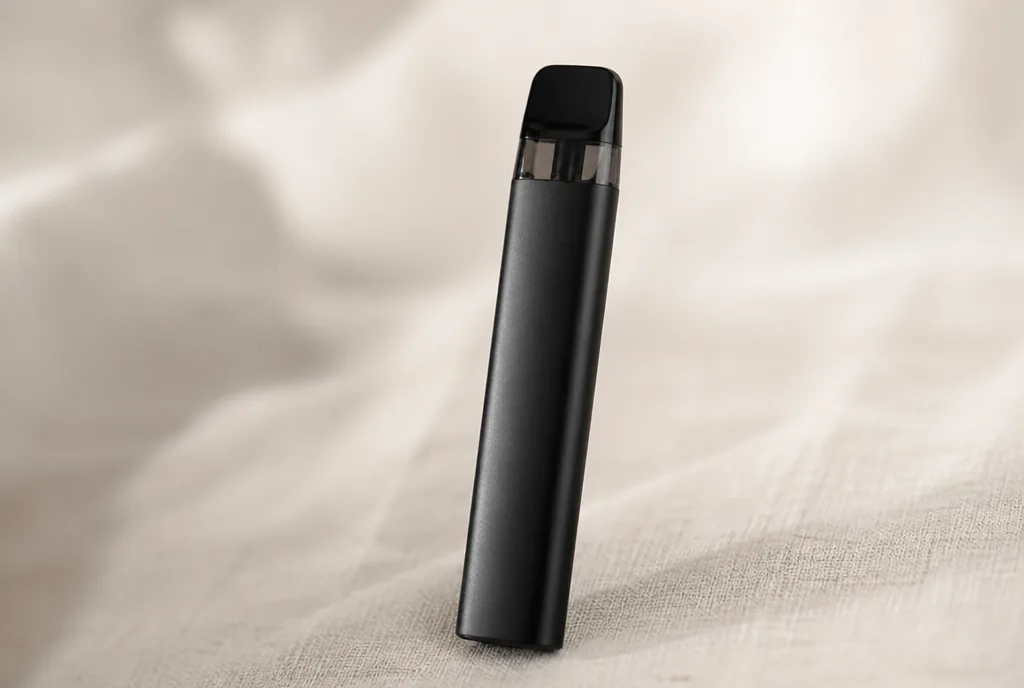
Compact pods dominate, and the reason is structural. Since single use devices were banned across the United Kingdom on 1 June 2025, manufacturers have transferred their convenience promise onto rechargeable hardware. The result is a wave of devices that look like the old disposables, work like refillables, and are sold on battery life and pod capacity.
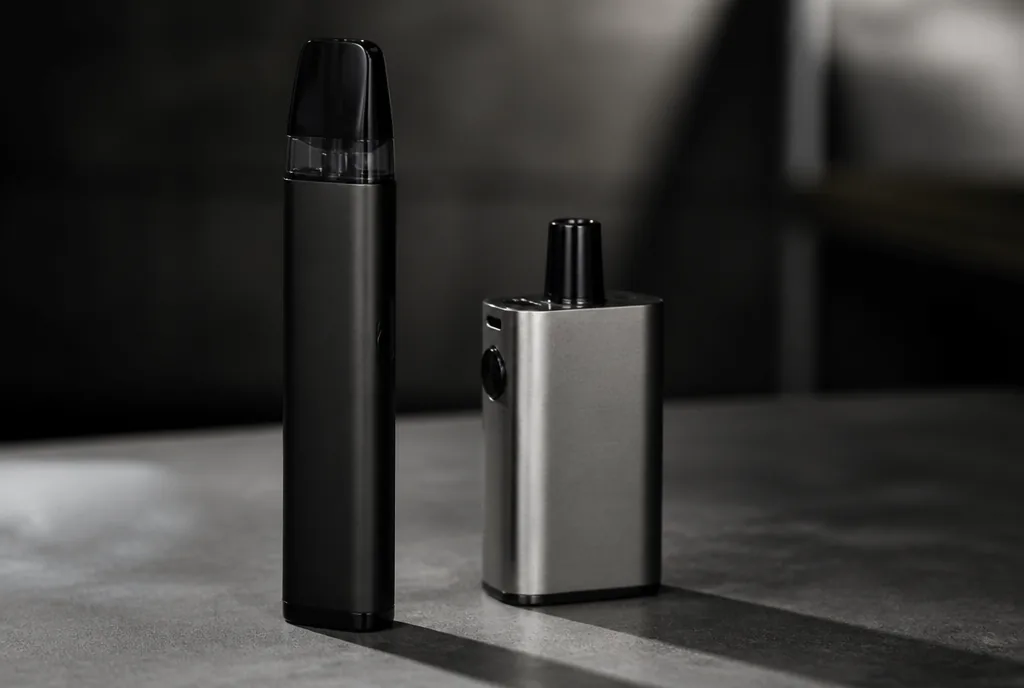
Powerful kits have become exceptional releases. Over the same period the shelves show only a handful, the Geekvape Aegis Legend 5, the Voopoo Drag 5 and comparable devices among them. The segment has not disappeared, but it renews itself slowly, on cycles measured in years rather than months, as our piece on the big vape mod explains.
The third movement is the high endurance format. Larger batteries, higher capacity pods, and marketing built entirely around how long the thing lasts. It is the most visible development in the 2026 catalogue and the most argued over in the trade.
The method for judging a launch
A well communicated release tells you nothing about how a device performs in a pocket. Three checks settle it, and all three are made before purchase, in a shop or on a serious product page.
Cartridge compatibility is the decisive one. A device introducing a proprietary pod format makes you dependent on a single reference. If the manufacturer drops the range in two years, the hardware becomes unusable in perfect working order. A model reusing an already widespread format benefits from broad supply and from competition between retailers, which is exactly the strategy examined in our analysis of the OXVA pod ecosystem.
Real capacity beats claimed power. On a pod, maximum wattage is rarely the limiting factor. Battery capacity in milliampere hours, and pod volume, describe daily comfort far better. A device announced at forty watts with a small cell will run out long before a more modest one with a generous battery.
The filling system is the third. Top filling, without removing the pod, remains the best single indicator of careful design. Systems that force you to extract the cartridge and turn it over produce leaks and sticky hands. That detail is visible in thirty seconds on a product photograph.
Reading reviews with some method
Early reports published in the days after a launch often come from testers who received the product free. They describe ergonomics and finish accurately, and reliability barely at all, because reliability only becomes measurable after several weeks of use.
Reviews published three to six months after launch are far more instructive. Those are the ones flagging recurrent leaks, intermittent contacts and premature pod wear. Waiting that long before buying a launch costs nothing and avoids most of the unpleasant surprises.
British review sites help here, since several of them retest and re-rank devices through the year rather than publishing once. A device that stays in a ranking twelve months later has told you something a launch post cannot.
What the rules impose on every launch
No release escapes the British framework, and that mechanically limits where innovation can happen.
The Tobacco and Related Products Regulations 2016 set firm ceilings: 2 ml for a tank or pod, 10 ml for a nicotine containing refill bottle, 20 mg per ml for nicotine strength. Producers must also notify their products to the MHRA, which is the competent authority for the notification scheme, before they can be sold. No launch can therefore differentiate itself on nicotine capacity.
Two further dates now shape the year. Vaping Products Duty applies to vaping liquid from 1 October 2026, with a duty stamp scheme alongside it, and from 1 April 2027 HMRC guidance makes it an offence to sell vaping products without a valid stamp outside duty suspension. Separately, the Tobacco and Vapes Act 2026 received Royal Assent on 29 April 2026, and under government guidance the age of sale for all vaping and nicotine products becomes 18 and over from 29 October 2026, including products containing no nicotine.
That is precisely why manufacturers have moved their pitch onto battery life, claimed puff counts and body thickness. The technical room to manoeuvre lies elsewhere, and an informed reader now knows where to look for it.
Do you need new vape kits every season
No, and the current pace of the market makes the question faintly absurd. A properly maintained pod works for years, while ranges renew themselves every six to twelve months.
There is also an argument rarely made across a counter. Every abandoned device becomes electronic waste containing a lithium cell, which requires separate collection and does not belong in household rubbish. Specialist retailers generally take back hardware that has reached the end of its life, a simple gesture that carries weight in a sector turning over this fast.
The real moment to change arrives when your model’s consumables become hard to find, when the battery no longer lasts the day, or when your practice shifts towards a different draw style. Outside those three cases, replacing working hardware achieves very little beyond a new colour, which is also the argument made in our assessment of the Joyetech range.
Frequently asked questions
Where can you see launches before they reach British shops?
Manufacturers usually announce models on their own channels several weeks ahead of distribution here. Trade shows are the other source that runs ahead of the shelves.
Is a launch more expensive than the previous generation?
Generally yes, for the first few months. The outgoing model is often discounted at exactly that moment, which makes it the best value in the catalogue provided its cartridges remain listed.
How can you tell whether a cartridge will stay available?
The number of retailers listing it is the best indicator. A cartridge sold by a single shop signals a confidential format, and one to avoid for hardware meant to last.
Are launches tested before going on sale?
Products sold here must be notified to the MHRA before they are placed on the market. That process covers composition and emissions. It is not a test of build quality or mechanical reliability.
Is it better to buy in a shop or online?
For a first device, a physical shop lets you judge weight, draw and handling, three things no product page conveys. For reordering identical consumables, online is perfectly adequate.
Replacing hardware at the right moment rather than the right rhythm
The release calendar belongs to manufacturers, not to vapers. New vape kits deserve buying when they solve a specific problem in your current use: cartridge availability, insufficient battery life, or repeated leaks. The rest of the time, keeping what you own, cleaning it properly and carrying it in a decent protective case remains the most sensible decision, and comfortably the least wasteful. That is the filter worth applying to every one of the new vape kits appearing on a British shelf this year.
Editorial content for adult readers only. Vaping products usually contain nicotine, a substance that causes addiction. Not for sale to under-18s in the United Kingdom. This article is not a buying recommendation.