Vape case: choosing the right protection
A drop into a bag, a bottle that was not shut properly, two spare cells touching at the bottom of a pocket. Vaping hardware tolerates neither impact nor loose carrying, and yet that is exactly how most of it travels. A vape case answers a very concrete problem, and it is usually bought after the fact, once the accident has already happened.
What a vape case is actually for
A vape case protects the device from knocks, limits the consequences of a leak when the tank is full, and prevents direct contact between spare cells and other metal objects. Those three jobs do not always come together in one product, which is why buying blind rarely works.
A rigid case takes a fall far better than a soft pouch, but it takes up more room. A silicone skin absorbs everyday micro knocks without doing anything useful against a leak. The choice therefore depends on the real use: a daily commute in a pocket, transport in a bag, or storage at home between sessions.
The second role, less visible, concerns the removable cells used in higher power devices. A lithium cell in contact with keys or coins can short circuit and heat dangerously. A compartmented case isolates each one, which the pocket of a pair of jeans has never done.
A third role is usually underestimated. Without protection, scratches accumulate on the body and connections work loose through repeated rubbing against other objects. A case slows that premature ageing, even on hardware bought last month.
Formats, matched to the hardware
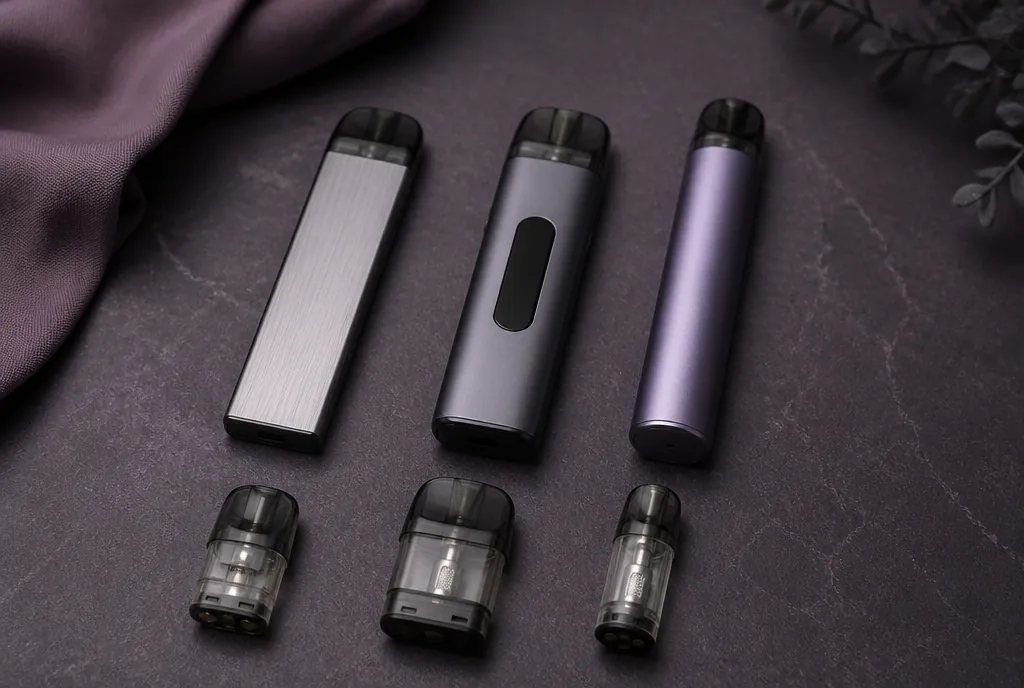
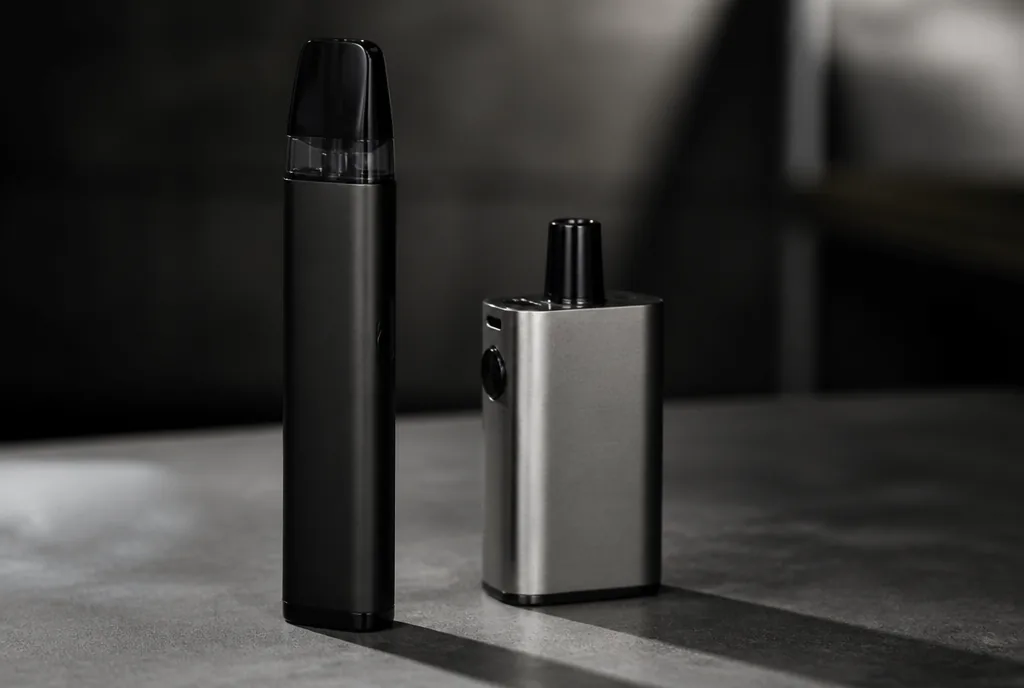
The right format depends first on the size of what you are protecting. A slim pod does not need the same thing as a two cell box.
The soft pouch is designed for compact devices and slides into a jacket pocket. It cushions light knocks but will not contain a leak if a pod is badly seated. It is the most common format on British shelves, which is no surprise given how completely the market has moved to pods since single use devices were banned across the United Kingdom on 1 June 2025.
The rigid case is built for a bulkier mod, often with separate compartments for the device, a bottle of liquid and spare coils. A hard plastic or reinforced shell takes a fall considerably better than plain fabric, and it is the format that earns its place in luggage.
The compartmented cell wallet is the one that matters most. Each cell sits in its own insulated slot, separated from everything else. It is the only format that treats the short circuit risk properly, and a great many vapers discover that far too late.
Materials and what they change day to day
Not every material behaves the same against impact and against the small leaks that reach almost everyone eventually.
Silicone absorbs minor knocks and washes under a tap after a spill. It offers no serious protection against a hard fall onto a solid floor, because it has no rigidity to give.
Faux leather and leather are stiffer, resisting wear and the constant rubbing against other objects in a bag. Genuine leather models are rarer in this category and age well, but they stain and need wiping immediately when liquid gets on them.
Hard plastic, used on flight case style products, protects against violent impact and crushing. It suits home storage and travel far more than daily pocket carrying, where its bulk becomes the problem rather than the solution.
The checks that matter before buying a vape case
Four points deserve attention, well beyond the look of the product in a listing photo.
The first is the exact dimensions of the device concerned, measured rather than estimated. A case that is too tight strains the connections, one that is too roomy lets the hardware move and knock about with every step.
The second is how the model copes with a leak. A waterproof lining or a removable base that wipes clean stops one isolated incident from ruining the inside of the case permanently.
The third is the closure: a solid zip, a discreet magnet or a press stud flap. A closure that wears quickly stops staying shut in a bag, which cancels the entire point of the object.
The fourth, often neglected, is the thickness and weight added to the whole. A case that is too thick makes a pod awkward to pull out quickly, and that detail counts for a device used many times a day. Trying the pair together, hardware and case, is worth doing before committing to an online order with no easy return.
Capacity, cells and the British specifics
British hardware is helpfully consistent on one point. Tanks and pods are capped at 2 ml, nicotine containing refill bottles at 10 ml and nicotine strength at 20 mg per ml, under the Tobacco and Related Products Regulations 2016. Even a substantial setup therefore stays reasonably compact.
What varies is the number of bottles. Because nicotine containing liquid is sold here in 10 ml bottles, a day out often means two or three rather than one large one. Compartment count matters more than raw internal volume, and that is the single most useful thing to look at on a listing.
On the more powerful setups described in our piece on the big vape mod, carrying removable cells isolated in a compartmented case is not a comfort feature. It is the basic safety rule repeated by manufacturers and by British retailers, who sell plastic cell cases for a pittance alongside the cells themselves.
Two habits complete the picture. Check the wrap, the coloured plastic sleeve around each cell, because a torn wrap exposes the metal body and must be redone before that cell travels anywhere. And never treat a charger cradle as a transport container, whatever the temptation.
Living with it: one case or two
The market has moved decisively towards compact formats, as our survey of current releases shows, and cases have followed. They are slimmer now, drawn for pods rather than for the large boxes of a few years ago.
Some pod ecosystems, such as the one covered in our look at OXVA hardware, are compact enough to be happy with a simple soft pouch rather than a bulky rigid case. Matching the protection to the device rather than to the worst case scenario keeps the whole thing usable.
Conversely, a vaper who alternates between a pod for the day and a larger device at home is better served by two separate cases than by one model claiming to suit everything. The versatility announced by some manufacturers rarely translates into good protection for either format.
Frequently asked questions
Is a case really necessary for a pod?
Not essential for sedentary use at home, but recommended as soon as there is daily carrying in a pocket or a bag, mainly to avoid the repeated knocks that eventually damage the connections.
Can a bottle of liquid go in the same case as the device?
Yes, if the case has a dedicated and sealed compartment. Without separation, even a slight leak from the bottle can reach the device or the spare coils stored beside it.
How do you clean a silicone case stained with liquid?
Rinsing in warm water with a little mild soap is enough in most cases. Let it dry fully in the open air before putting hardware back in, to avoid trapping any residual moisture.
Does a case genuinely protect against cell short circuits?
Only compartmented models, with one insulated slot per cell, address that risk properly. A plain pouch without separation does not prevent it, since the cells can still touch each other.
Can you fly with a vape in a case?
Devices and spare cells travel in the cabin and never in the hold, and airlines ask that spare batteries be protected against short circuits. Rules vary in detail between carriers, so the operator’s own page is worth checking before departure.
Matching a vape case to the way you actually vape
The right vape case is never the most decorated one. It is the one that matches the device you genuinely carry and the journey you genuinely make, which are two questions worth answering honestly before opening a listing. A soft pouch is enough for a compact pod, while a compartmented model becomes necessary the moment removable cells enter the picture. Taking those criteria in that order is what prevents a badly chosen vape case from joining the hardware it was meant to protect at the back of a drawer.
Editorial content for adult readers only. Vaping products usually contain nicotine, a substance that causes addiction. Not for sale to under-18s in the United Kingdom. This article is not a buying recommendation.